
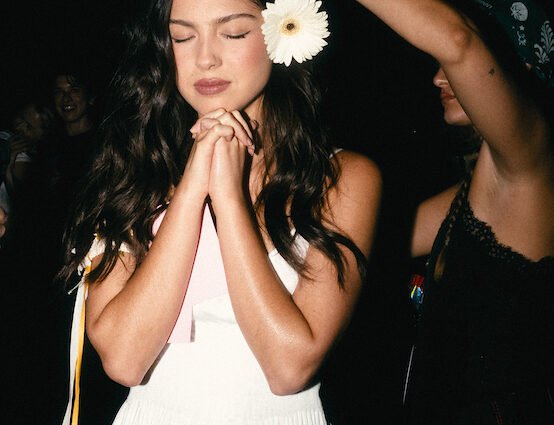
A new generation of music festivals is emerging—and Olivia Rodrigo is putting purpose at the center of the stage.
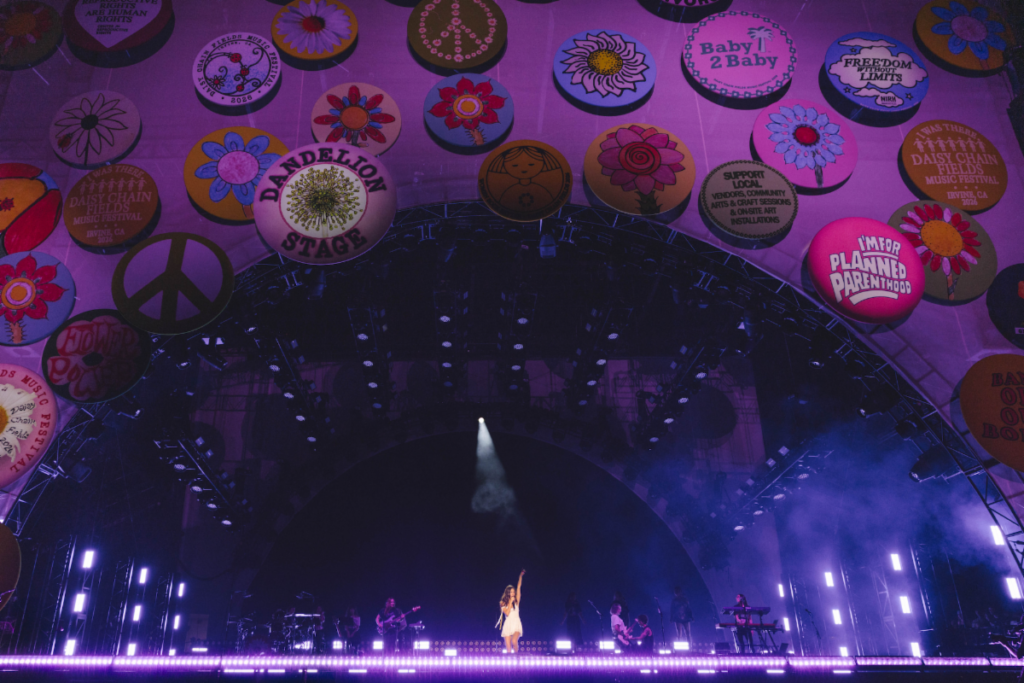
IRVINE, CA — August 31, 2026
A music festival can be measured in ticket sales, attendance numbers, streaming spikes and viral moments.
But what if its most important number isn’t any of those?
What if it’s $20 million?
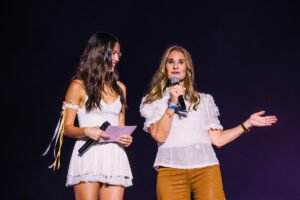
That is the figure now attached to Daisy Chain Fields, the inaugural music festival founded by Olivia Rodrigo, after philanthropist Melinda French Gates announced that she would match the festival’s initial $10 million commitment to ten nonprofit organizations supporting women and girls.
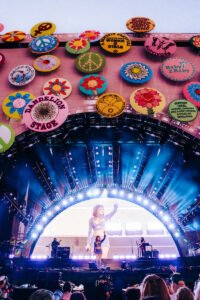
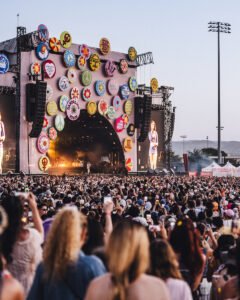
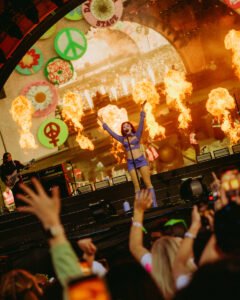
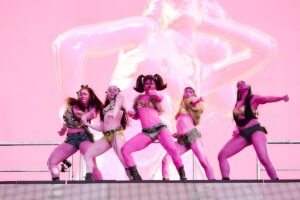
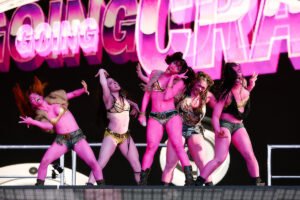
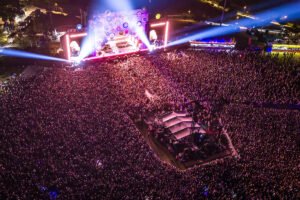
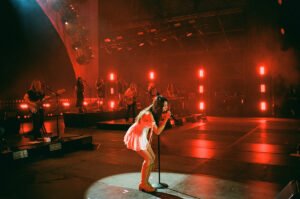
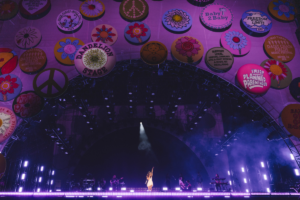
The announcement came August 29 onstage at Great Park in Irvine, California, where Rodrigo closed the first edition of Daisy Chain Fields with a lineup that brought together some of the most important women in contemporary music alongside artists whose influence stretches back decades.
For DreadMusicReview, this is a story worth covering even though philanthropy isn’t normally our primary beat.
Because the music is the mechanism.
And Daisy Chain Fields may represent something bigger than another new festival.
It could be a blueprint for what happens when artists stop treating their cultural influence as something separate from their values—and start building the values directly into the event.
THIS WASN’T JUST A FESTIVAL WITH A CHARITY ATTACHED
Daisy Chain Fields was created around a straightforward idea: bring women in music together while creating opportunities for education, conversation and action around issues affecting women and girls.
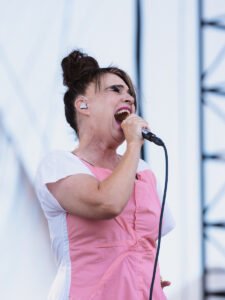
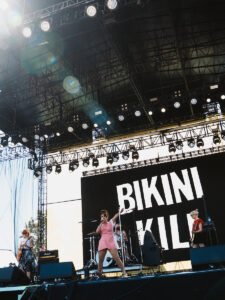
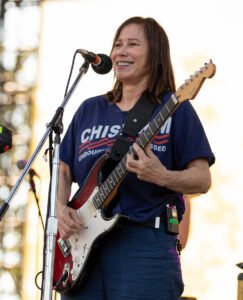
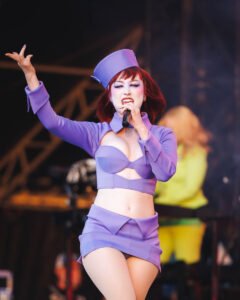
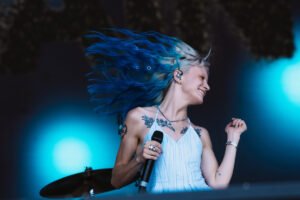
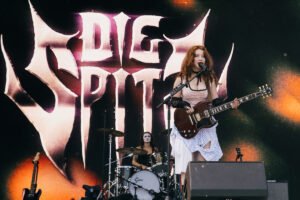
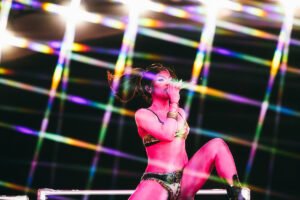
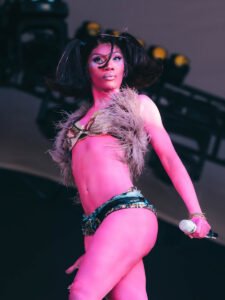
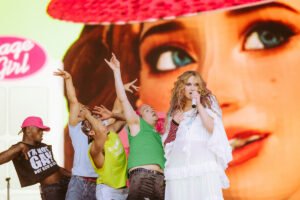
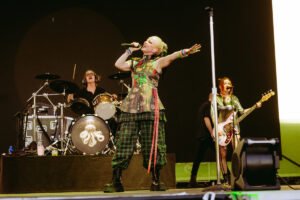
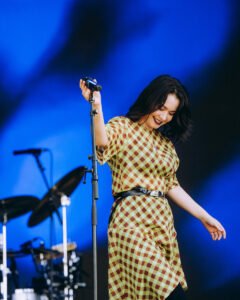
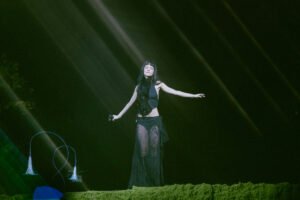
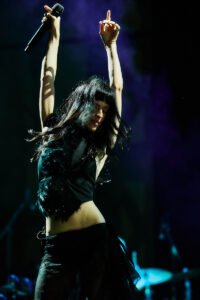
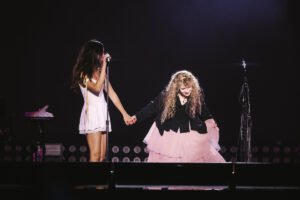
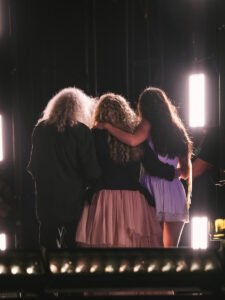
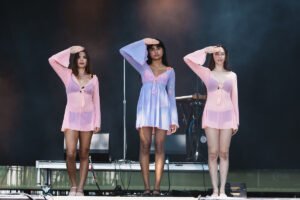
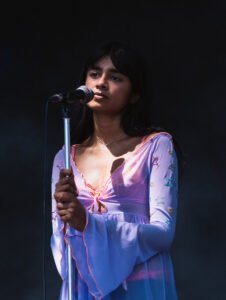
The inaugural event featured artists including Chappell Roan, Doechii, Mitski, Garbage, Bikini Kill, The Breeders, Santigold, Rachel Chinouriri, Die Spitz, Olivia Rodrigo and others, with special appearances from Sarah McLachlan, Stevie Nicks and Alanis Morissette.
That lineup matters.
It wasn’t built around a single genre.
It wasn’t built around a single generation.
And it wasn’t simply a collection of current streaming stars.
Daisy Chain Fields connected artists who helped shape alternative and rock music with artists defining the current pop landscape.
Bikini Kill.
Garbage.
The Breeders.
Sarah McLachlan.
Stevie Nicks.
Alanis Morissette.
Chappell Roan.
Doechii.
Mitski.
Olivia Rodrigo.
Different eras.
Different sounds.
Different audiences.
One stage.
That intergenerational component may ultimately prove to be one of the festival’s most significant achievements.
OLIVIA RODRIGO IS BUILDING SOMETHING BEYOND HER OWN CAREER
Rodrigo has already established herself as one of the most influential young artists in popular music.
But founding a festival represents a different kind of ambition.
An artist controls a record.
A touring artist controls a setlist.
A festival founder begins influencing an entire ecosystem.
Daisy Chain Fields gives Rodrigo the ability to decide which artists receive a platform, which organizations receive attention, and what kind of conversation surrounds the music.
That is a considerable expansion of influence.
And it is one Rodrigo appears to be taking seriously.
The festival was conceived as an event where music, community and advocacy could coexist rather than compete with one another. The official mission describes Daisy Chain Fields as an effort to use collective experiences to inspire ideas, understanding and action.
That distinction is important.
This wasn’t simply:
“Come to a concert, and some of the money goes to charity.”
The nonprofit organizations were physically integrated into the festival experience through the Daisy Chain Reactionphilanthropy village, where attendees could learn about the organizations and the issues they address.
In other words, the charitable mission wasn’t hidden in the fine print.
It was part of the festival.
$10 MILLION BECAME $20 MILLION
The initial commitment from Daisy Chain Fields was $10 million.
Then Melinda French Gates stepped onto the stage.
Her announcement doubled the amount to $20 million supporting the festival’s ten nonprofit partners. Pivotal, French Gates’ organization, confirmed that its additional $10 million commitment matched the funds raised through Rodrigo’s inaugural festival.
That’s more than a headline number.
It demonstrates what can happen when an artist’s audience, a major live event and philanthropic capital intersect.
And it raises an interesting question for the music industry:
Could this become a model?
THE TEN ORGANIZATIONS BEHIND THE MONEY
The Daisy Chain Fields Fund will support ten organizations working across several areas affecting women and girls.
They include:
- Baby2Baby
- Black Mamas Matter Alliance
- Center for Reproductive Rights
- FreeFrom
- Jhpiego
- Johns Hopkins Center for Indigenous Health
- National Domestic Workers Alliance
- National Institute for Reproductive Health
- National Women’s Law Center
- Planned Parenthood
Their work ranges from maternal health and reproductive rights to economic security, domestic-violence prevention, Indigenous health and gender equity.
For music fans, that list might initially seem far removed from an evening of live performances.
That’s precisely what makes the festival’s approach interesting.
The event effectively used the attention generated by music to introduce tens of thousands of people to organizations doing work they might otherwise never encounter.
WHY THIS MATTERS TO MUSIC
The relationship between musicians and social causes is hardly new.
Artists have spent decades using concerts, recordings and public platforms to raise money and awareness.
But the economics of modern music have changed.
Artists now possess enormous direct relationships with their audiences through social media, streaming platforms and digital communities.
The most successful musicians can reach millions of people without traditional media acting as the gatekeeper.
Daisy Chain Fields demonstrates what that influence can look like when it is built into the structure of an event.
Instead of asking:
“How can an artist promote a cause?”
Rodrigo’s festival asks a different question:
“What happens when the cause becomes part of the event itself?”
That is a much more ambitious proposition.
A NEW GENERATION MEETS THE WOMEN WHO CAME BEFORE
Perhaps the most compelling element of Daisy Chain Fields is the generational conversation happening through the music itself.
Stevie Nicks represents one of the most enduring careers in rock.
Sarah McLachlan helped define a generation of singer-songwriters and created the Lilith Fair model that remains an important reference point for women-centered music festivals.
Alanis Morissette became one of the defining alternative-rock voices of the 1990s.
Bikini Kill helped reshape the conversation around women, punk and independent music.
Garbage and The Breeders occupy important places in alternative rock history.
Then came artists like Chappell Roan, Doechii and Rodrigo, representing a new generation of performers who have inherited that history while developing something distinctly their own.
That makes Daisy Chain Fields more than a lineup.
It becomes a conversation between generations.
THE LILITH FAIR CONNECTION
The comparisons to Lilith Fair are inevitable.
Rodrigo has openly identified the influential 1990s festival as an inspiration for Daisy Chain Fields, and the parallels are obvious: a women-centered lineup, multiple genres, community-building and a social mission.
But Daisy Chain Fields isn’t simply attempting to recreate Lilith Fair.
The audience is different.
The technology is different.
The social environment is different.
And the way artists communicate with their fans is radically different.
If Lilith Fair demonstrated the power of women musicians creating their own space within the festival industry, Daisy Chain Fields is exploring what that idea looks like in the age of TikTok, streaming and direct-to-fan culture.
That makes Rodrigo’s experiment worth watching.
THE FESTIVAL ALSO GAVE MUSIC FANS SOMETHING THEY DON’T ALWAYS GET
A reason to stay after the encore.
At most festivals, the experience ends when the music stops.
Daisy Chain Fields attempted to make the conversation continue.
Attendees could visit nonprofit organizations, learn about their work and engage with issues affecting women and girls.
That may sound like a small distinction.
It isn’t.
A person may attend a festival because they love Chappell Roan.
They may stay because Doechii is performing.
They may arrive early for Bikini Kill.
They may discover Mitski.
They may have no particular interest in nonprofit organizations.
But if they leave knowing the name of an organization, understanding an issue or deciding to support a cause, the festival has accomplished something beyond entertainment.
Music created the doorway.
AND THEN THERE WAS THE MUSIC
It would be a mistake to let the philanthropy overshadow what Daisy Chain Fields ultimately is:
A music festival.
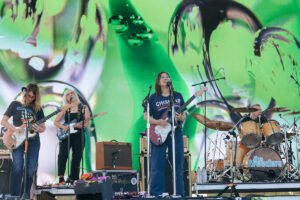
The inaugural event featured a remarkable range of sounds, from punk and alternative rock to pop, hip-hop and singer-songwriter traditions.
Chappell Roan.
Doechii.
Mitski.
Garbage.
Bikini Kill.
The Breeders.
Santigold.
Sarah McLachlan.
Stevie Nicks.
Alanis Morissette.
And Olivia Rodrigo herself.
For an audience member standing in the middle of that crowd, the charitable mission didn’t replace the music.
It amplified it.
THE BIGGER QUESTION FOR THE MUSIC INDUSTRY
Daisy Chain Fields succeeded financially on its first attempt.
But its more interesting test will come later.
Can it become an annual event?
Can the $20 million commitment become the beginning rather than the conclusion?
Can other artists create festivals with similarly ambitious social missions?
And perhaps most importantly:
Can the music industry turn moments of cultural attention into lasting action?
Those questions don’t have answers yet.
Daisy Chain Fields is only one festival.
But it is a fascinating experiment.
DREADMUSICREVIEW’S TAKE
DreadMusicReview doesn’t need to cover every philanthropic initiative involving a musician.
Nor should we.
Our job is music.
But sometimes music becomes bigger than the record, the concert or the chart position.
Daisy Chain Fields is one of those moments.
Olivia Rodrigo didn’t simply book a festival.
She built an event around an idea: that music can create community, community can create attention, and attention can become action.
The first Daisy Chain Fields raised $10 million.
Melinda French Gates doubled it.
Now $20 million is moving toward ten organizations working with women and girls across the United States and around the world.
That’s significant.
But the more important story may be what happens next.
Because if Rodrigo’s experiment succeeds, future artists may look at their own festivals differently.
Not just as concerts.
Not just as businesses.
Not just as extensions of a tour.
But as platforms.
And that is something DreadMusicReview believes is worth watching.
The DMR Bottom Line
Daisy Chain Fields isn’t important because it raised $20 million.
It’s important because it demonstrates what can happen when music, audience, influence and purpose occupy the same stage.
The first chapter ended in Irvine.
The bigger story may have just begun.





DreadMusicReview | Music. Culture. Impact.
This story was developed from the Daisy Chain Fields announcement and independently checked against current reporting and publicly available information. DreadMusicReview has not independently audited the nonprofit organizations’ operations or the distribution of funds beyond the information publicly provided by the fehttps://dreadmusicreview.com/2026/09/01/olivia-rodrigos-daisy-chain-fields-turns-music-into-a-20-million-force-for-women-and-girls/stival and its philanthropic partners.
This review was written by MrDread, and polished with AI for context, editing and quality. In the news world, if AI is used in any way, the public should be aware of it.