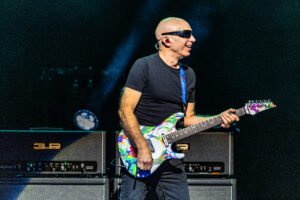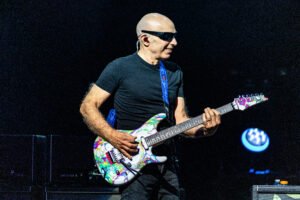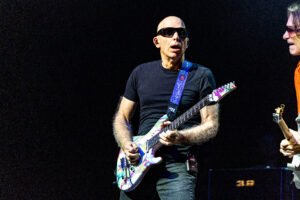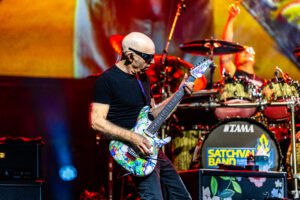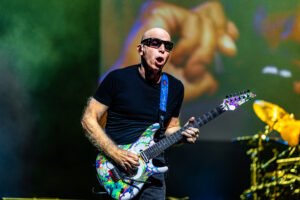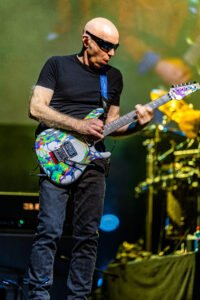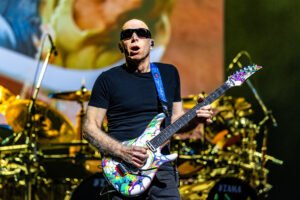
Few guitarists have had a greater impact on instrumental rock music than Joe Satriani. Emerging in the 1980s with albums such as Surfing with the Alien and Flying in a Blue Dream, Satriani helped bring instrumental guitar music into the mainstream at a time when vocal-driven rock dominated the charts. His combination of technical mastery, memorable melodies, and innovative techniques—including legato phrasing, tapping, whammy-bar effects, and fluid improvisation—set a new standard for modern guitar playing. Beyond his solo career, Satriani’s influence extends through his role as a teacher, having instructed future guitar icons including Steve Vai, Kirk Hammett, and Alex Skolnick. His annual participation in the G3 concert tours further showcased his dedication to celebrating and advancing the art of guitar performance, inspiring generations of musicians across rock, metal, blues, and fusion genres.
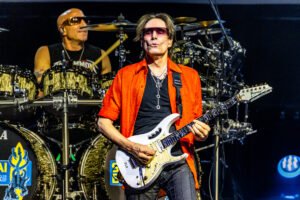
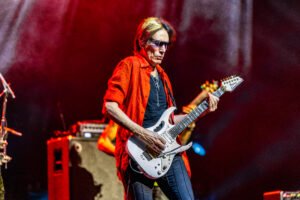
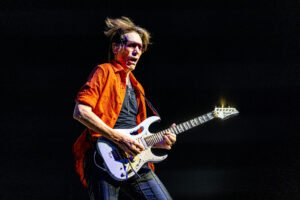
Likewise, Steve Vai stands as one of the most innovative and influential guitarists in modern music history. After gaining early recognition transcribing music for Frank Zappa and later performing in his band, Vai launched a groundbreaking solo career defined by albums such as Passion and Warfare, widely regarded as one of the greatest instrumental guitar records ever made. His theatrical stage presence, advanced technique, and willingness to push the boundaries of the instrument transformed expectations of what a guitarist could achieve. Vai’s unique blend of rock, classical, jazz, and experimental influences helped pioneer the “shred guitar” movement while maintaining a strong emphasis on composition and emotion. Through collaborations with artists such as David Lee Roth and Whitesnake, as well as his signature instruments developed with Ibanez, Vai has left an enduring mark on both the music industry and guitar culture. Together, Satriani and Vai represent two of the most respected figures in instrumental rock, inspiring countless musicians to pursue technical excellence while never losing sight of creativity and musical expression.
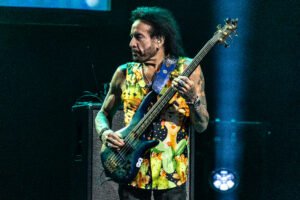
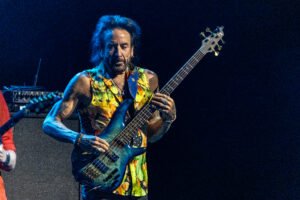
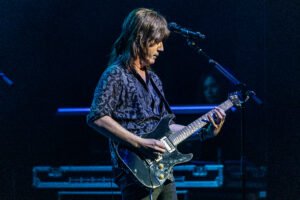
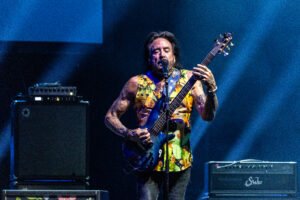
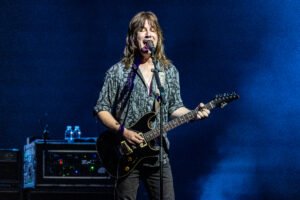
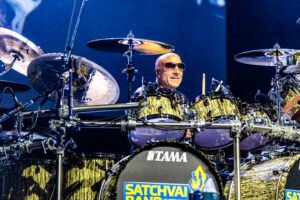
The newly formed SATCHVAI Band represents the culmination of a friendship and musical partnership that spans more than five decades between guitar legends Joe Satriani and Steve Vai. Joined by renowned drummer Kenny Aronoff, bassist Marco Mendoza, and guitarist Pete Thorn, the band has moved beyond occasional collaborations and G3 appearances to become a full-fledged touring and recording act. Following the release of collaborative singles including “The Sea of Emotion, Pt. 1”, “I Wanna Play My Guitar” featuring Glenn Hughes, and the recent single “Dancing,” the group has been building anticipation for its forthcoming debut album. Satriani and Vai have described the new material as a celebration of their shared musical history while also pushing their creativity into new territory, blending soaring melodies, technical virtuosity, and hard-rock energy.
The band’s ambitious Surfing with the Hydra Tour has become one of the most anticipated guitar-centered tours in recent memory. Originally launched in Europe before expanding to North America, the tour showcases the chemistry between two of rock’s most influential guitarists while delivering a full-band concert experience rather than a traditional guitar clinic. Fans can expect performances of new SATCHVAI material alongside classics from Satriani’s and Vai’s legendary solo catalogs, as well as select cover songs that highlight the band’s versatility. The tour’s title references Vai’s famous multi-neck Hydra guitar and Satriani’s iconic Surfing with the Alien legacy, symbolizing the fusion of their musical worlds. With support from Animals as Leaders on the North American dates and reports of sold-out shows during the European run, Surfing with the Hydra has quickly established itself as a landmark event for guitar enthusiasts and rock fans alike. And for those walking through the doors of the Borgata Event Center, these iconic six string wizards will take them on a non-stop musical odyssey of guitar virtuosity.
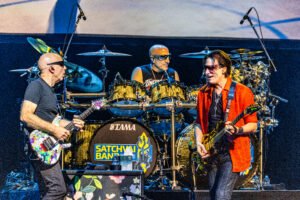
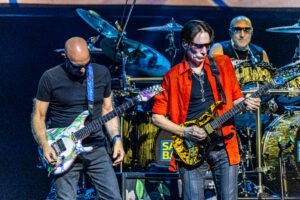
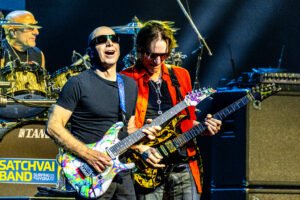
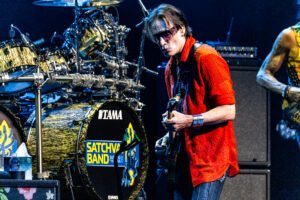
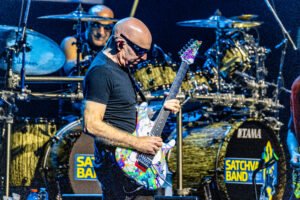
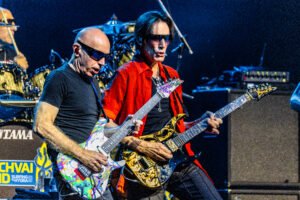
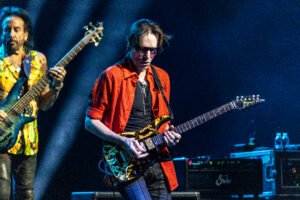
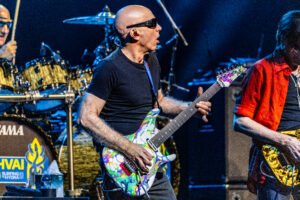
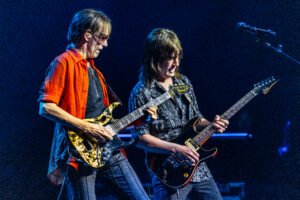
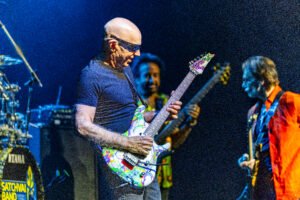
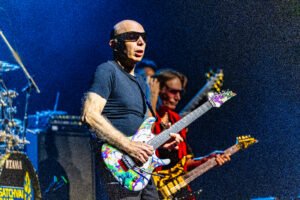
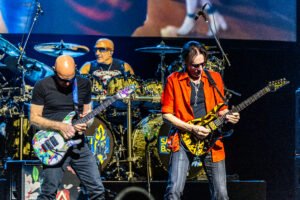
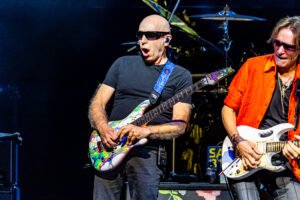
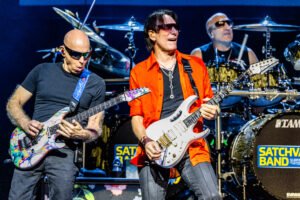
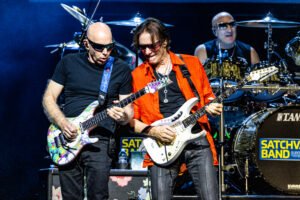
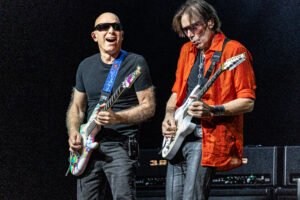
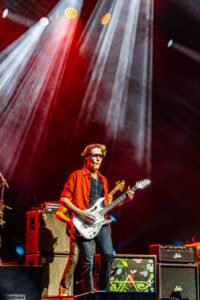
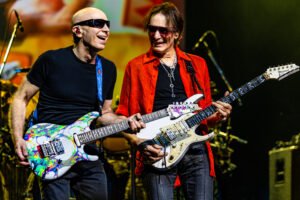
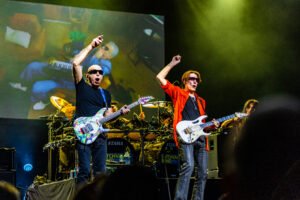
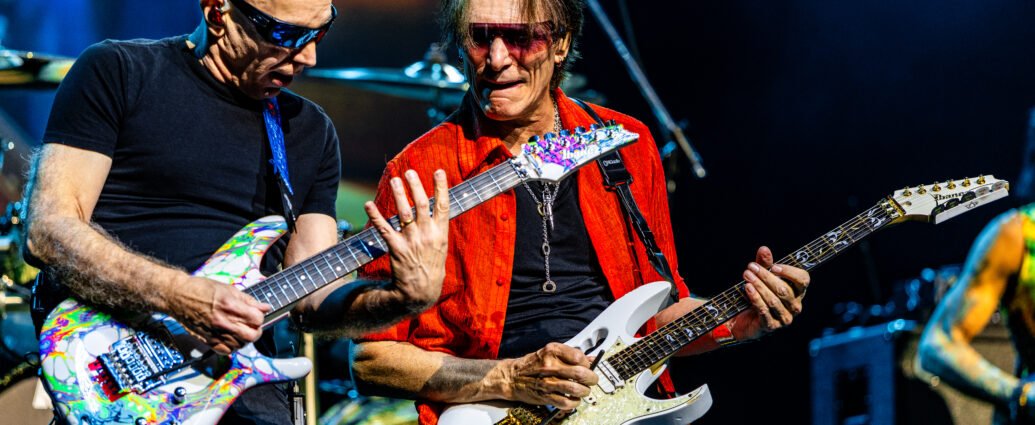
The anticipation inside the Borgata Event Center in Atlantic City had been building for months, and by the time the lights finally dimmed, the venue was packed with guitar enthusiasts eager to witness a historic collaboration between two of the greatest instrumental rock musicians of all time. The SatchVai Band—featuring Joe Satriani and Steve Vai on lead guitars, Kenny Aronoff on drums, Marco Mendoza on bass, and Pete Thorn on rhythm guitar—arrived onstage to a deafening roar from the crowd. The stage design was both elegant and futuristic, with towering LED screens displaying cosmic imagery, swirling galaxies, and animated guitar-inspired visuals that reflected the musical journeys of both legendary guitarists. As Satriani and Vai walked to center stage side-by-side, grinning at one another like old friends about to share a secret, it became immediately clear that this was more than a concert. It was a celebration of decades of friendship, innovation, and the limitless possibilities of the electric guitar. The evening began with “Dancing,” one of the newest SATCHVAI Band compositions, and the song immediately established the chemistry between the musicians. Aronoff’s thunderous drumming provided a muscular foundation while Mendoza’s bass lines locked everything together with precision. Thorn’s rhythm guitar work filled every corner of the mix, allowing Satriani and Vai the freedom to soar above it with intertwining melodies and dazzling harmonized leads. The audience responded instantly, many rising from their seats before the song had even reached its first climax.
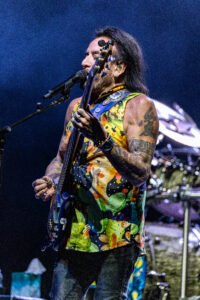
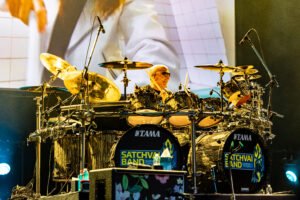
The energy continued to rise as the band launched into “I Want to Play My Guitar,” with Marco Mendoza stepping forward to handle lead vocals. Mendoza’s charismatic stage presence transformed the Event Center into a massive rock-and-roll celebration, and his gritty vocal delivery perfectly complemented the playful spirit of the song. Satriani and Vai traded solos throughout the performance, each seemingly challenging the other while simultaneously pushing the song to greater heights. Pete Thorn’s rhythm work remained indispensable, keeping the song grounded while the two guitar virtuosos explored every available sonic possibility. As the audience sang along to the chorus, Mendoza encouraged participation, pointing his microphone toward the crowd and smiling as thousands of voices joined him. The chemistry between the musicians was impossible to miss. Rather than feeling like two guitar heroes competing for attention, the performance felt like a unified band operating at an elite level. Aronoff, seated behind a massive drum kit illuminated by synchronized lighting effects, delivered explosive fills that elevated every transition and earned cheers from fans who understood they were witnessing one of rock’s most respected drummers at work.
The evening then shifted into more atmospheric territory with “Sea of Emotion, Pt. 1.” The LED screens transformed into oceans of deep blues and shimmering waves, creating a visual landscape that perfectly matched the song’s emotional depth. Satriani’s melodic sensibilities were front and center during this performance, his guitar singing with an almost vocal quality that has long defined his style. Vai responded with beautifully textured counter-melodies that complemented rather than overshadowed the composition. The interaction between the two guitarists was mesmerizing, with each player leaving space for the other while contributing ideas that expanded the song’s emotional impact. Mendoza and Aronoff created a powerful rhythmic pulse beneath the melodies, while Thorn’s subtle chordal textures added remarkable depth. The audience listened with complete attention, many standing silently as the instrumental narrative unfolded. It was one of the first moments during the concert where technical brilliance took a backseat to pure musical storytelling, reminding everyone that both Satriani and Vai have built their careers not merely on speed and complexity, but on their ability to communicate genuine emotion through their instruments.
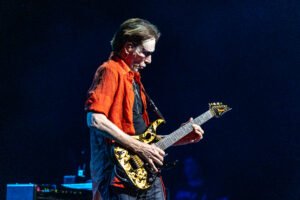
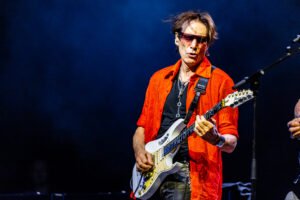
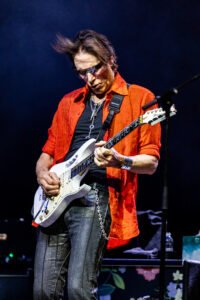
Steve Vai then took center stage for a segment that showcased some of his most celebrated solo material. The first selection, “Zeus in Chains,” exploded from the speakers with immense force. Accompanied by dramatic lighting effects that resembled bolts of lightning and ancient mythological imagery, Vai attacked the song with extraordinary intensity. His guitar tone sliced through the arena while Aronoff’s relentless drumming pushed the composition forward. The complexity of Vai’s phrasing was breathtaking, yet every note served a larger musical purpose. This was followed by “Little Pretty,” which demonstrated Vai’s remarkable ability to blend technical sophistication with groove-oriented songwriting. The crowd responded enthusiastically, cheering every intricate run and expressive bend. Watching Satriani stand nearby and admire his longtime friend during these performances added another layer of meaning to the evening. Their mutual respect was evident throughout the concert. Rather than retreating backstage during each other’s spotlight moments, they remained present and engaged, visibly enjoying the opportunity to witness one another perform.
One of the most electrifying moments of the night arrived when the band seamlessly merged Satriani’s “Ice 9” with Vai’s “The Crying Machine.” The transition between the two songs was executed flawlessly and highlighted the distinct yet complementary musical personalities of both guitarists. “Ice 9” featured Satriani’s trademark blend of melodic hooks and technical fireworks, while “The Crying Machine” introduced Vai’s more experimental and aggressive approach. Together, the combination felt like a masterclass in modern instrumental rock. The visual presentation intensified as lasers swept across the audience and the LED panels displayed rapidly changing geometric patterns. Aronoff delivered a performance worthy of special recognition during this section, navigating complex rhythmic shifts with effortless precision. Mendoza’s bass work was equally impressive, providing a powerful anchor amid the whirlwind of guitar activity. Thorn continued to demonstrate why he was the perfect choice for this ensemble, maintaining the structural integrity of each composition while allowing the lead players maximum creative freedom.
The emotional centerpiece of the evening arrived with Satriani’s beloved “Flying in a Blue Dream.” Bathed in cool blue lighting, the song transported the audience into another world. Satriani’s performance was nothing short of magnificent, every phrase delivered with confidence, elegance, and heartfelt expression. The audience erupted in applause following each melodic peak, fully appreciating the beauty of one of his most enduring compositions. Without allowing the momentum to fade, the band transitioned into the iconic “Surfing with the Alien.” The familiar opening instantly triggered one of the loudest reactions of the night. Fans jumped to their feet as Satriani unleashed the song’s legendary riffs and soaring lead passages. Vai joined him throughout the performance, adding harmonized lines and playful interactions that made the classic feel fresh and exciting. The sight of the two guitar legends standing shoulder to shoulder while performing one of the most influential instrumental rock songs ever written was unforgettable. Every note seemed to generate another wave of excitement from the crowd.
As the concert moved toward its final act, Vai delivered a breathtaking rendition of “Tender Surrender.” The venue became almost silent as he coaxed impossibly expressive sounds from his guitar. Every bend, vibrato, and sustained note felt deeply personal, demonstrating why the piece remains one of the most admired instrumental compositions in modern guitar history. The emotional atmosphere continued with “Teeth of the Hydra,” featuring Vai’s remarkable Hydra guitar. The audience watched in amazement as he simultaneously navigated multiple necks and instrumental functions, creating a performance that felt as much like performance art as a traditional guitar solo. Following this display of innovation, Satriani responded with the relentless energy of “Satch Boogie,” igniting another eruption of applause. The song’s blues-infused swagger provided a perfect contrast to the complexity of Vai’s preceding performance. Moments later, Satriani offered one of the evening’s most heartfelt experiences with “Always with Me, Always with You.” Couples embraced, fans swayed gently, and countless phone lights illuminated the venue as the timeless melody resonated throughout the room.
The emotional climax arrived when Vai stepped forward for “For the Love of God.” Few instrumental compositions command the level of reverence associated with this piece, and the audience responded accordingly. As the opening notes echoed through the Event Center, a collective hush fell across the crowd. Vai delivered the song with extraordinary passion, building each phrase toward moments of breathtaking intensity. Satriani stood nearby, visibly appreciating the performance alongside the audience. When the final sustained note faded into silence, the crowd erupted into a standing ovation that lasted several minutes. The musicians gathered at center stage, exchanging smiles and acknowledging the audience’s appreciation. Yet everyone knew the evening was not truly over. After leaving the stage briefly, the band returned for an encore that would provide a fitting conclusion to an already unforgettable night.
The encore began with “Crowd Chant,” instantly transforming the venue into a massive singalong. Thousands of fans enthusiastically participated, shouting the memorable melody back toward the stage while Satriani and Vai encouraged the interaction. The atmosphere was joyous and celebratory, perfectly reflecting the spirit of the entire evening. Then came the final surprise: an explosive rendition of “Born to Be Wild.” The classic rock anthem provided the perfect vehicle for the band’s collective talents. Mendoza handled the vocals with swagger and energy, while Satriani and Vai traded fiery solos that pushed the song far beyond its original framework. Aronoff attacked his drums with seemingly limitless energy, and Thorn’s rhythm guitar gave the performance its driving force. As the song approached its conclusion, pyrotechnic effects erupted from the stage, showers of sparks illuminated the venue, and the entire crowd sang along at full volume. When the final chord rang out, the audience responded with thunderous applause and a standing ovation that seemed unwilling to end. The SatchVai Band had delivered not only a spectacular concert but a celebration of friendship, musicianship, and the enduring power of guitar-driven rock music, leaving Atlantic City with a performance that fans would be talking about for years to come.