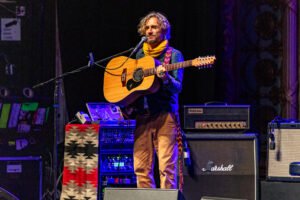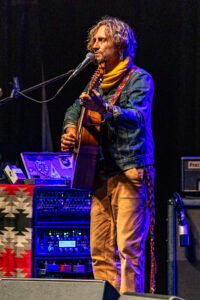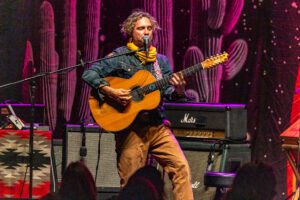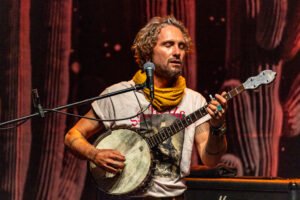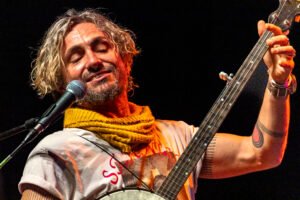

John Butler has long stood out as a fiercely individual voice in modern roots and alternative music, blending elements of folk, blues, reggae, and rock into a style that feels both grounded and exploratory. His musicianship—especially his intricate fingerstyle guitar work—is often compared to a one-man orchestra, where rhythm, melody, and percussion coexist in a single performance. Whether wielding a 12-string acoustic or an electric guitar, Butler brings a raw, almost improvisational energy to his playing, marked by dynamic shifts and emotionally charged phrasing. Beyond technique, his songwriting leans into themes of environmental awareness, personal freedom, and spiritual reflection, giving his music a sense of purpose that resonates with a broad, global audience.
With his latest release, Prism, Butler expands his sonic palette while staying true to his core identity. The record showcases a more introspective and textured approach, weaving in subtle electronic elements and layered production without losing the organic warmth that defines his sound. Lyrically, Prism feels reflective—almost like a refracting lens on his past work—exploring growth, change, and perspective. It’s a testament to his evolution as an artist: not one who chases trends, but one who refines and reshapes his voice over time. In doing so, Butler continues to influence a new generation of musicians who value authenticity, technical skill, and meaningful storytelling in equal measure.
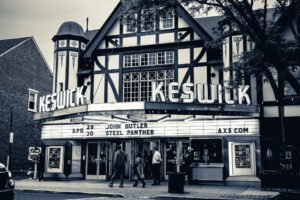
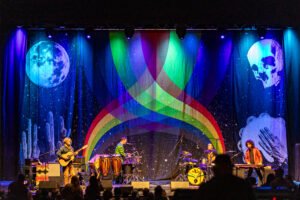
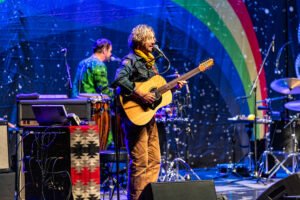
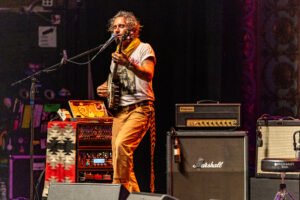
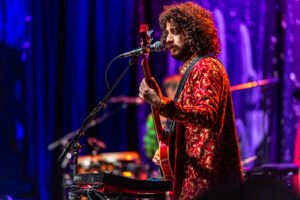
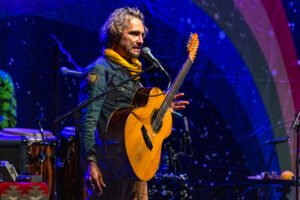
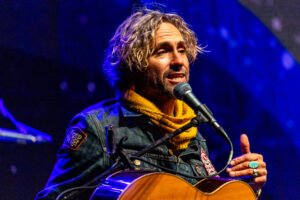
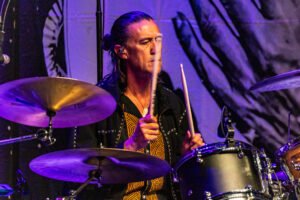
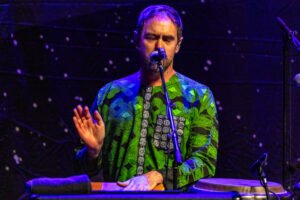
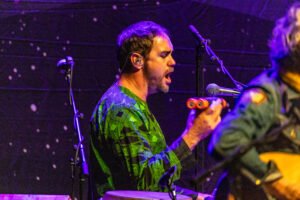
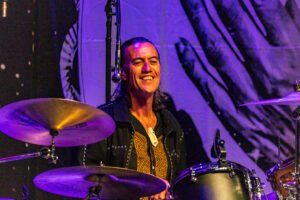
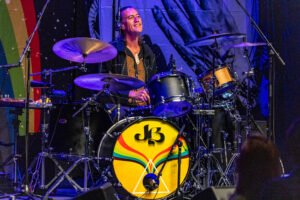
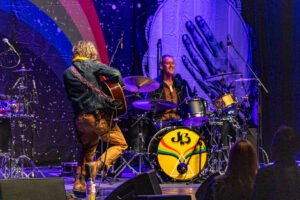
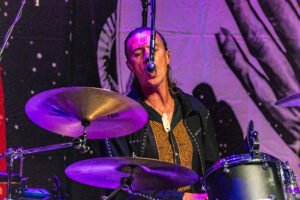
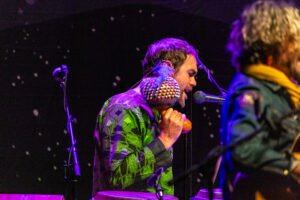
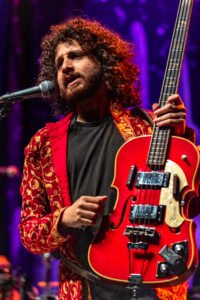
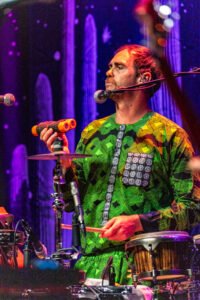
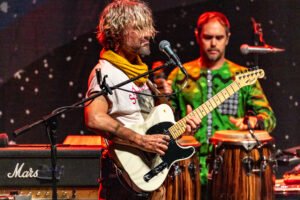
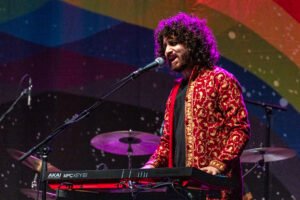
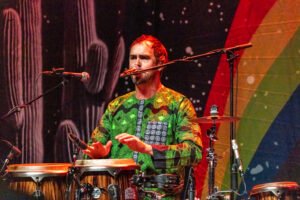
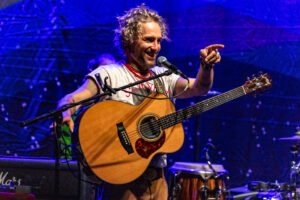
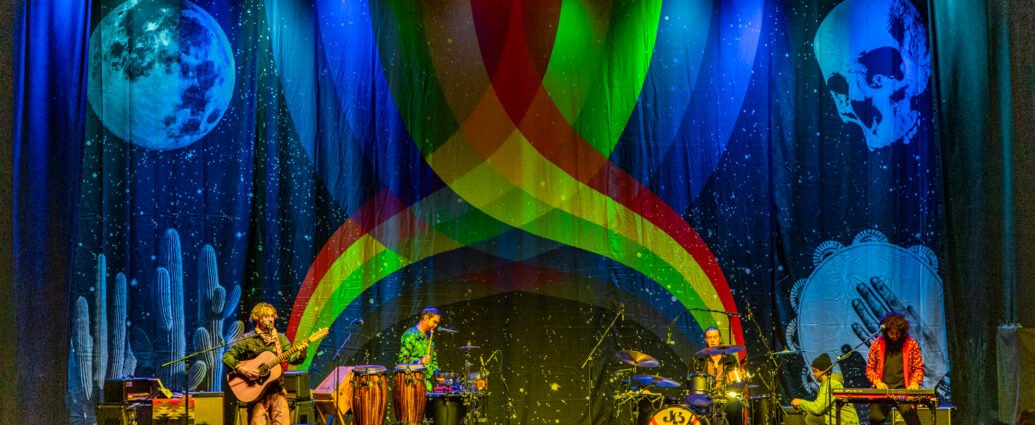
The night at Keswick Theatre unfolded with an atmosphere that felt equal parts intimate and electrifying as John Butler and his band took the stage. The historic venue, known for its warm acoustics and ornate interior, seemed perfectly suited to Butler’s dynamic blend of roots, rock, and improvisational brilliance. From the moment the lights dimmed, the crowd leaned forward in anticipation, only to erupt as Butler emerged with his band—Michael Barker on drums, Ian Perez on bass and keyboards, and Michael Boase on percussion—each musician poised to contribute to the layered, rhythmic journey ahead.
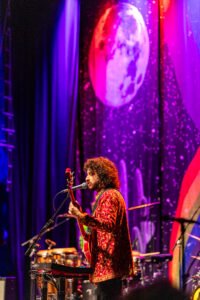
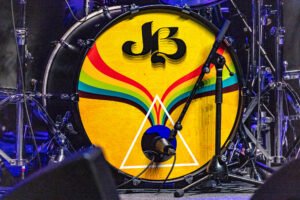
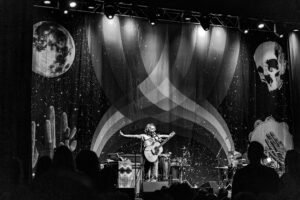
Behind them stood a stunning stage backdrop modeled after the artwork from Prism, its vibrant, refracted colors stretching across the stage like a living canvas. The design shimmered under shifting lights, morphing with each song and giving the performance a visual identity that mirrored the album’s themes of perspective and transformation. It wasn’t just decoration—it became part of the storytelling, amplifying the emotional arcs of the set as colors pulsed and faded in time with the music.
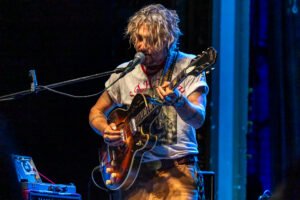
The band wasted no time launching into “Tahitian Blue,” setting a hypnotic groove that immediately drew the audience into Butler’s world. His guitar work danced effortlessly between intricate fingerpicking and percussive strumming, while Barker’s drumming provided a deep, steady heartbeat. The crowd responded instinctively, bodies swaying in unison as the music washed over them, signaling that this would be no passive listening experience.
“Going Solo” followed with a more introspective tone, showcasing Butler’s ability to command the stage even in quieter moments. His vocals carried a raw sincerity, supported by Ian Perez’s subtle keyboard textures that filled the room without overpowering the song’s delicate core. It was a moment that highlighted the band’s restraint and sensitivity, proving that their chemistry extended beyond high-energy jams.
The mood shifted again with “So Sorry” and “Better Than,” both of which injected a renewed sense of urgency into the set. Butler’s guitar riffs became sharper, more insistent, while Michael Boase’s percussion added layers of rhythmic complexity that pushed the songs forward. By this point, many in the audience were already on their feet, dancing in the aisles and between rows, unable to resist the infectious energy radiating from the stage.
“Blame It On Me” and “The Way Back” deepened the emotional resonance of the night, their reflective lyrics carried by soaring instrumental passages. The interplay between Butler and Perez was particularly striking here, basslines weaving seamlessly with guitar melodies to create a rich, immersive soundscape. The backdrop’s shifting hues seemed to echo the songs’ introspection, bathing the stage in deep blues and purples.
A standout moment came with the band’s rendition of “Wade in the Water,” which transformed the traditional tune into a sprawling, rhythm-driven exploration. Barker and Boase locked into a powerful groove, giving Butler the freedom to stretch out on guitar and sitar, blending textures in a way that felt both ancient and modern. The audience responded with claps and call-and-response vocals, turning the performance into a communal experience.
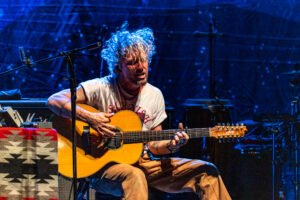
The momentum continued through “Doing Just Fine,” “Ocean,” and “King of California,” each song building on the last. “Ocean,” in particular, served as a breathtaking centerpiece, with Butler delivering an extended instrumental performance that showcased his technical mastery and emotional depth. The room fell into near silence at times, only to erupt into cheers as he pushed the piece into soaring crescendos.
As the set neared its end, “Used to Get High,” “Treat Yo Mama,” and “Close to You” brought the energy back to a celebratory peak. These tracks had the entire theater moving, with dancing spilling into every corner of the venue. Butler’s connection with the audience was undeniable—he smiled, joked, and fed off their enthusiasm, creating a feedback loop of energy that elevated the performance even further.
The encore of “Peaches & Cream” and “Zebra” felt like a perfect closing statement. The former brought a playful, groove-heavy vibe, while “Zebra” ended the night on an anthemic note, its iconic riff echoing through the Keswick Theatre as the crowd sang along. As the final notes rang out, it was clear that this wasn’t just a concert—it was an immersive, communal celebration of music, artistry, and connection, led by one of the most compelling performers of his generation.